
AFTER BASHAR

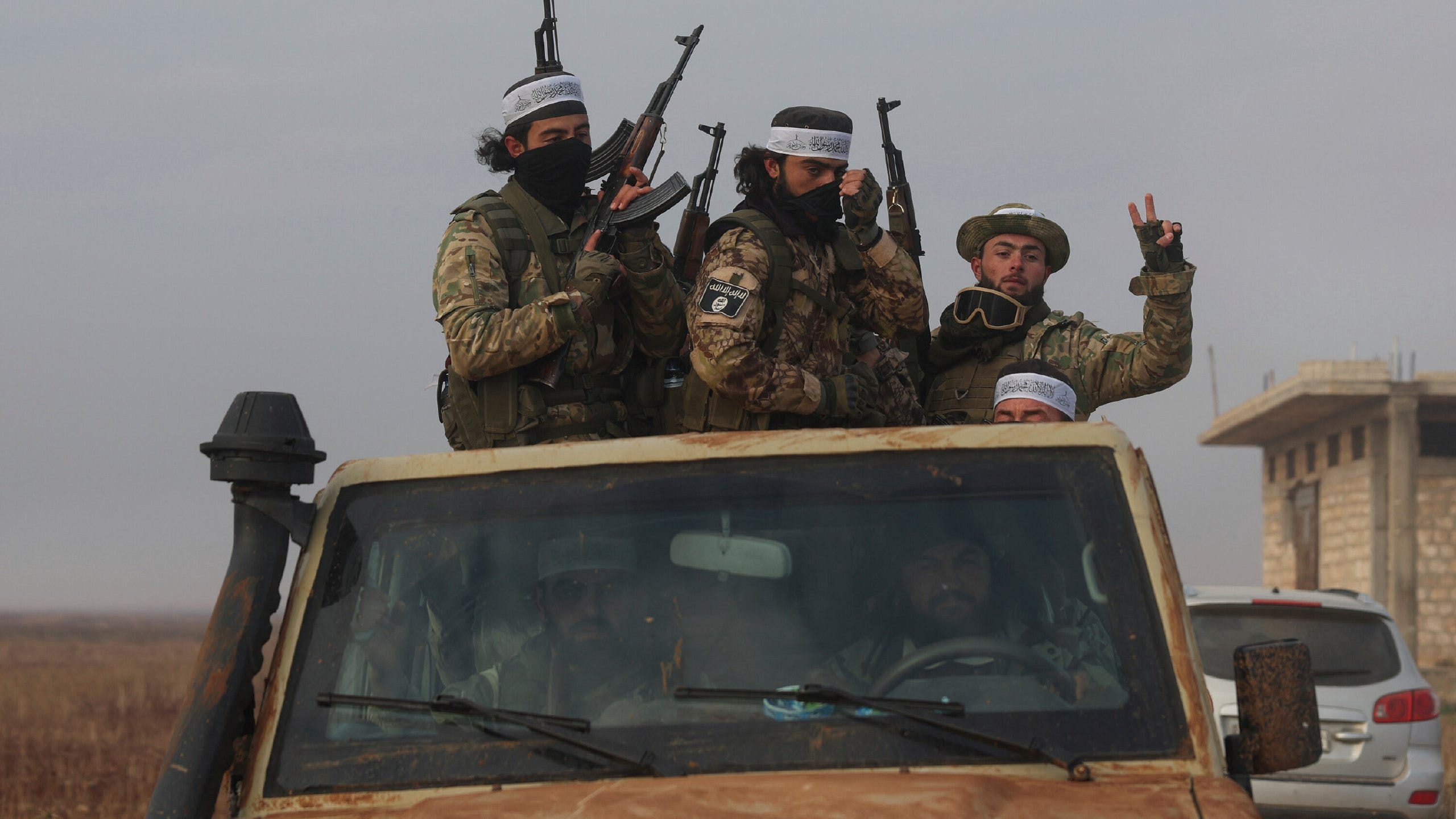
The curtain falls on the sudden fall of Syria into the hands of jihadist terrorists. As well as on the Syrian Arab Republic, and on the Assad dynasty. There are still quite a few dark points, or not yet defined, that will probably become clearer in the days and weeks to come. Obviously, above all, Assad's behavior during the crisis and up to its epilogue, and perhaps even more so that of the Syrian Arab Army, which not only practically did not fight a single battle to counter the jihadist advance, but also staged a mystifying pantomime in order to cover up its decision to hand the country over to Hay'at Tahrir al-Sham. The obvious carelessness and obvious mistakes made by Russia and Iran are also still shrouded in the emotional fog of these days. But, indeed, many of these things will become clearer later. At this point, in any case, it is a question of drawing a line, and looking beyond.
The first thing to make clear is that the jihadist victory – especially given the timing and manner in which it was achieved – is far from putting an end to the Syrian chaos; on the contrary, it is a harbinger of further rekindling. The example that comes immediately to mind is Libya. To begin with, there is the Kurdish question, which Ankara is trying to resolve by unleashing its Syrian National Army militias (and also by intervening directly), also taking advantage of this transitional phase, but which is far from finding a peaceful solution. Furthermore, the Kurdish forces (who at least for now continue to count on US support) control a large slice of territory, from north to south, and above all part of the border with Turkey. The question of the (power) relations between HTS and SNA is also yet to be verified. It is likely that some form of agreement will be reached [1], but it will not be an easy coexistence; and in any case, in my opinion, the HTS will not accept a subordinate role to Turkey, nor a significant influence of Ankara in Syria, and as it consolidates its power this will increase.
That chaos has yet to actually unfold is evident from Israeli action; not so much in the foreseeable creation of a buffer zone beyond the Golan (yet another disguised annexation), but in the fact that the air force is taking steps to destroy all the SAA's strategic depots and armaments. Since medium-long term developments are unpredictable, it is better to seize the opportunity to ensure that Syrian arsenals do not fall into the wrong hands.
At the moment it is not clear whether or not there will be a more or less rapid expulsion of the Russians, but in any case it is clear that, even if the bases of Tartus and Hmeimim were to remain, the situation would be radically different from today and, in the best of cases, they would find themselves closely surrounded by a panoply of Western electronic espionage tools.
It is obvious that we are in the presence of a significant defeat, both for Russia and for Iran, and the evident approximation with which they are dealing with the situation is the best proof of this. In the short term, Turkey and Israel will benefit, obviously. But for neither of them is it a decisive victory.
What we can expect, in the short to medium term, is a de facto balkanization of the former SAR, despite everyone appealing to the maintenance of the territorial integrity of the country. The most realistic hypotheses in this regard foresee at least three or four cantons, plus some variables. The bulk of the country will remain in the hands of the HTS-SNA, which will be joined by a myriad of small groups of the moderate pro-Western opposition. The area east of the Euphrates will remain substantially a Kurdish enclave, with a strong presence in the north, and which essentially hinge on the US bases in Syrian territory, Al Omar and Al Shaddadi, in the northeast, Deir ez-Zor-Conoco in the east, and Al Tanf in the south. While in the southwest a large buffer zone occupied by Israeli forces is emerging, which however aim to create a real buffer state based on the Druze community [2].
Possible – but in my opinion unlikely – the creation of a semi-autonomous canton on the Mediterranean coast, around the Russian bases of Latakia-Hmeimim and Tartus, where the Alawite community lives. Much will depend on how relations between Moscow and Damascus develop, following the regime change. According to what a Kremlin official told TASS, for the time being the leaders of the Syrian armed opposition have guaranteed the security of Russian military bases and diplomatic institutions in Syria. But security does not mean permanence. It is likely that an agreed dismantling will eventually take place.
There are also two other variables to consider that are not exactly irrelevant. The first is ISIS, which is still present in the Syrian desert, and which will certainly strengthen following the release of many of its fighters from Syrian prisons. Considering that in the ranks of the HTS, despite the moderate make-up adopted by Al Jolani (himself a former leader of ISIS first and then Al Qaeda), there are many militants who come from the fringes of the most radical extremism, it is quite possible that some of these could sooner or later suffer the call of the forest, and return to the orbit of Daesh. Moreover, a significant portion of the jihadist militias is made up of Uighurs, Uzbeks and Tajiks, who are clearly not very interested in building a democratic Syrian state (even if Al Jolani himself is one...), and much more interested in creating a new caliphate, from which to spread the jihad of the cutthroats - especially towards their countries of origin in Central Asia.
Another variable will sooner or later be constituted by Iran, which certainly will not give up so easily to exercise its influence on the neighboring and traditionally friendly country. For the moment Tehran – like a bit of everyone… – is realigning itself to the de facto situation, trying to refer to UN resolution 2254 and aiming for an internationalization of the regime-change process. But this is obviously a transitory tactic, given that neither the sponsors of the jihadist operation, nor for other reasons the UN, have the desire and the means to pilot the transition in Damascus. On the other hand, the strong hostility of the jihadists towards Iran is a fact, which makes any appeasement unlikely. Inevitably, therefore, sooner or later we will witness the Iranian attempt to create a political and (perhaps) military force, on the model of the Iraqi formations. The potential pool to work on is the Alawite community, a part of the former Syrian army (especially those who took refuge in Iraq), and members of the Baath party (which in recent years had been marginalized by Assad).
And for the new regime, a cross between an Islamic caliphate and a NATOstan outpost, the problems do not end here.
First of all, a state infrastructure must be rebuilt, and above all a country that has never truly recovered from the civil war must be put back on its feet. Considering that Syrian oil is still almost entirely in Kurdish-American hands, this means that the necessary investments will require resources that are not easy to find. Turkey is certainly not able to financially support this effort, indeed it will try to take advantage of the situation to get rid of a large part of the Syrian refugees present on its territory, and who constitute a considerable burden. And it is unlikely that Gulf countries' capital will be tempted to invest in an unstable country. Furthermore - and this is not at all secondary - the Israelis and Americans (and partly also the Russians), have actively dedicated themselves to the destruction of the entire defense system of the former SAA: aviation, missiles, air defense systems, ammunition depots, factories and military laboratories, everything has been destroyed with a series of targeted air strikes.
This means that the new Syrian state will not have much more than what the militias already have, to defend itself, and therefore will still be subject to pressure from powerful and well-armed neighbors (Turkey and Israel first and foremost). A rearmament process, which in turn requires considerable funds, as well as available suppliers..., and will take years to be completed. In fact, therefore, before Syria - assuming that it remains a unitary reality - returns to being a sovereign state, a lot of water will have to pass under the bridge. I repeat, Libya docet.
In conclusion, a substantial side note must be made regarding the meaning and value of this collapse. That the end of the Assad regime is, in itself and for its practical consequences, a hard blow for the forces fighting Western imperialism, is beyond question. But – and this should never be forgotten – what is underway is a war, not a triumphal march, and in war not all battles are always won.
Of course, even leaving aside the psychological value of this setback (amplified by the speed with which it occurred, and by its – so far – inexplicability), there are consequences of no small importance on the strategic level. If Russia were to lose its Syrian bases, it would be a major problem. The Mediterranean fleet would lose a safe base, even if it could count on a friendly landing place in Libya [3], and this would create further difficulties (the situation in the Black Sea is already not optimal). But if the loss of Tartus would be serious, even more so would be that of the Hmeimim airport, which is a fundamental stopover for the refueling of transport planes headed for sub-Saharan Africa, where the Russian presence is now significant. Just as, for the Axis of Resistance, the loss of the transit channel to and from Lebanon poses significant logistical problems.
Nonetheless, we must maintain a strategic and long-term view, without being overwhelmed by the emotional data, erasing the rest of the overall picture.
Russia is winning its conflict with NATO in Ukraine. Hezbollah has forced Israel into a ceasefire without having achieved any of its operational objectives. The Palestinian Resistance in Gaza and the West Bank is more alive and active than ever. And if it is true that every promise is a debt, we await the arrival of True Promise 3…
Notes
1 – Interestingly, although the uprisings in the south were led by the Kurdish SDF and the SNA, which was much closer to Damascus, when the HTS was still entering Homs, suddenly the push from the south towards the capital seemed to slow down enough to allow the city to fall into the hands of the jihadists.
2 – Shlomi Binder, head of Israeli military intelligence, AMAN, met with the head of the Syrian Druze community, Sheikh Mowafaq Tarif, to discuss this possibility. According to Naom Tibon, Major General of the IDF, “Israel is very interested in establishing a Druze state in Syria”.
3 – There has also been talk for some time of building a naval base in Sudan, on the Red Sea, but the current civil war in the country, and some uncertainty on the Russian side, have so far meant that it remains a project, and the actual construction is still at sea.
En mi opinión, la situación tampoco es ajena a la política exterior del nuevo presidente USA, para el cual, el frente de guerra en Oriente próximo es prioritario en relación al frente en Europa.
Claramente, las zonas oscuras de lo sucedido tienen que ver con los intereses judio-americanos.