
🔴 THE TRUCE

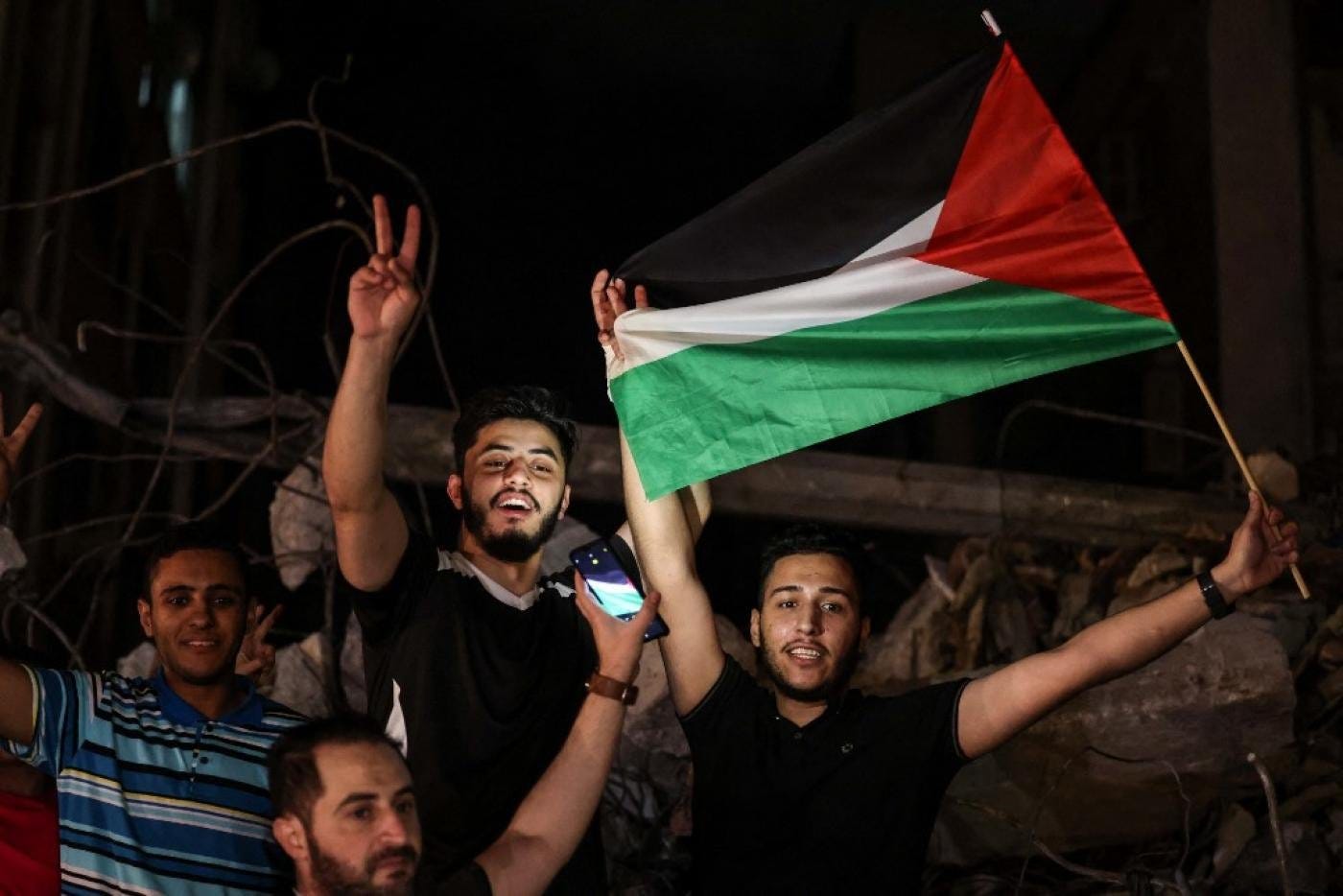
There is a truce, which will bring relief to a massacred population, living under bombs and with almost no food, no drinking water, no decent health care, for fifteen long months. This is already a very important thing in itself, just as it is of great importance that this truce does not come because the world was suddenly moved by so much suffering, nor because a quasi-president demanded it to give lustre to his coronation. It comes above all because the Resistance of the Palestinian people and its fighting formations has been immensely superior to that of the Israelis and their army. It comes because the Resistance has won this battle.
For this reason - although the protection of the Palestinians, children, women, the elderly - is a primary issue, it is really of relative importance whether, and until when, Israel will respect the truce, or whether it will have an immediate follow-up or not. We must never forget, in our living rooms, that even in the best of cases the war does not end here, because this is a war of liberation, and it will end only when Palestine is free. And there is no need to delude ourselves: the road is open, October 7 has considerably widened it, but the end is not around the corner. And in Gaza as in Jenin, in Sana'a as in Beirut, in Baghdad as in Tehran, they know this very well. There will still be a price to pay.
So, it is right to breathe a sigh of relief, it is right to celebrate, but not to delude ourselves that it is over here.
And there is another important thing, to keep in mind. Even if our heart beats for Palestine, even if what happened and is happening there touches deep chords and emotions, we cannot ignore the context in which all this takes place. This is a war of liberation that fits into a totally different framework from that in which, classically, other wars of liberation have taken place. And not only because it happens much later, in a radically different political season, but because - precisely - the context is so different that everything literally takes on a different nature.
First of all, because the region in which all this happens - the Middle East - is strategically crucial, both as the beating heart of fossil energy sources, on which much of the planet still depends, and because its geographical position places it at the center between Europe, Africa and Central Asia, and further towards the Indian Ocean.
Then because it is a region in which the legacy of European colonialism (borders drawn according to the colonizers' interests of division, peoples divided by frontiers drawn with a set square, and last but not least the European claim to continue to have a say in the destinies of colonized lands and peoples) is still very present, and in many ways pregnant.
As if that were not enough, this region is today at the center of a profound redefinition of the balance, which concerns first of all some of the local geopolitical actors - who are not few... - but which does not see the great global powers as extraneous. A regional redrawing in full and tumultuous progress, in which there is really no certainty about the final outcomes, which will most likely be very different from those that we like to imagine in the West. In these parts, in fact, the belief of possessing a sort of right to exercise power over others is hard to die. And above all, some taboos remain, some perspectives assumed to be inconceivable, which obviously makes it complicated to address the tangle of issues in a rational way. One above all, the existence of Israel, that is, of a European para-colonial state, founded on the religious supremacy exercised by a component - in any case a minority - of that community of believers, unfortunately affected by a pernicious messianism and an intolerable racism. And all this, in turn, while the entire world is in a phase of transformation, not at all peaceful, of epochal significance, which for the breadth and relevance of the changes underway could be defined as a shift in the earth's political axis.
This truce, therefore, calls us into question as much and as much as the war. It asks us, once again, to be part of History, and therefore to be part, to choose which side to be on. It asks us not simply to support the people of Palestine and their right to be free and sovereign on their land, but to understand how this fits into the broader contexts mentioned above, and therefore to act accordingly, keeping this general vision clear. Once - before becoming a reserve troop of Western-centric imperialism - European environmentalists said that it was necessary to "act locally, think globally". This is still a valid principle, and not only for environmental issues. With Palestine in our hearts, therefore, but also with the awareness that the fight for the right and liberation of peoples is longer and broader. And it has just begun.