
OPERATIONAL NOTES ON RUSSIAN FORCES IN UKRAINE

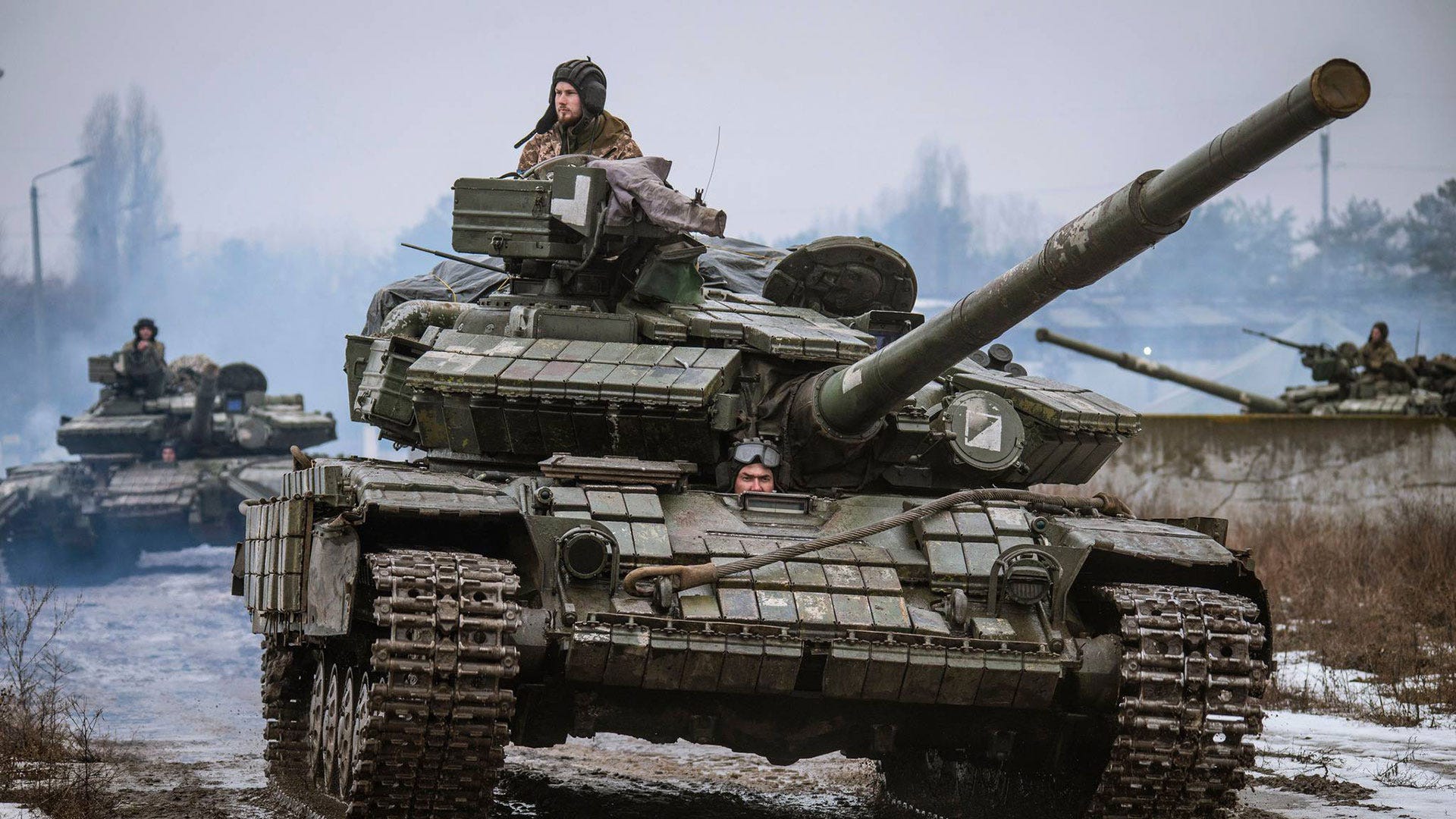
Why are the Ukrainian Armed Forces experiencing a constant—and growing—series of strongholds that have fallen, or are about to fall, while the Russian Armed Forces are encircling them in an operational encirclement?
Let’s start by saying that operational encirclement is when a group of enemy forces is almost entirely physically surrounded in a “pocket” (or “cauldron”), but the portion of the ring around the pocket that is still free is under artillery fire, making both resupply and retreat extremely difficult—sometimes impossible.
To understand how these situations arise, we need to have a clearer understanding of how both Russian and Ukrainian forces operate, and why.
First, it should be emphasized that the quantity and quality (training + experience) of Ukrainian forces is steadily declining, for a variety of reasons (essentially: losses suffered at the front, high desertions, increasing difficulty in mobilization, less time available for recruit training), which tend to combine to increase the overall effect, while Russian forces are experiencing the opposite trend (far fewer losses, low or no desertions, recruitment always exceeding losses). The combination of these two factors, which is accelerating, means that the Ukrainian armed forces have fewer and fewer personnel, and the well-trained and combat-experienced personnel are dwindling even faster, while the Russian armed forces are seeing a steady growth in personnel deployed on the front lines. This disparity in forces reaches considerable levels in some sectors, where the ratio can even be greater than 10:1.
Furthermore, the Russian armed forces, both in terms of quantity and quality of their equipment, have an immensely superior ability to strike enemy forces both at long range (missiles, drones, and guided bombs) and close to the line of contact (artillery).
Given these strategically valuable characteristics, and given that Russia’s objectives are not so much territorial conquest as the destruction of enemy military potential, the Russian armed forces’ actions unfold slowly and methodically, without excessive forward thrusts, even when and where they would be possible.
Fundamentally, therefore, the Ukrainian armed forces act defensively, along the entire line. And, as is easily understood, a defensive line requires not only fortifications, but the personnel to man and defend them. Consequently—especially if troops begin to run low—rather than deploying along a long line (which to be effective requires depth), the Ukrainians’ operational choice has been to leverage a series of urban centers (generally much easier to defend), some of which are fortified, and often rely on Soviet-era underground structures.
In turn, the Russians—taking advantage of their numerical and firepower superiority—first engage one of these strongholds in combat, exerting pressure on the defenses, partly to force the Ukrainians to concentrate resources there. Then they begin to move on the flanks, developing the encirclement maneuver. Regardless of the political considerations, which often push Zelensky to demand all-out resistance, for the Ukrainian forces there is often no alternative, because leaving the fortified area to retreat most often means having no equivalent line to fall back on. Once the operational encirclement is closed, Russian forces don’t attempt to close the ring, but instead ensure that the forced passage through the gap (under Russian fire) becomes a death trap for the Ukrainians (to resupply the besieged, evacuate the wounded, or withdraw the encircled forces). And at that point, it’s only a matter of time.