
THE PLOT

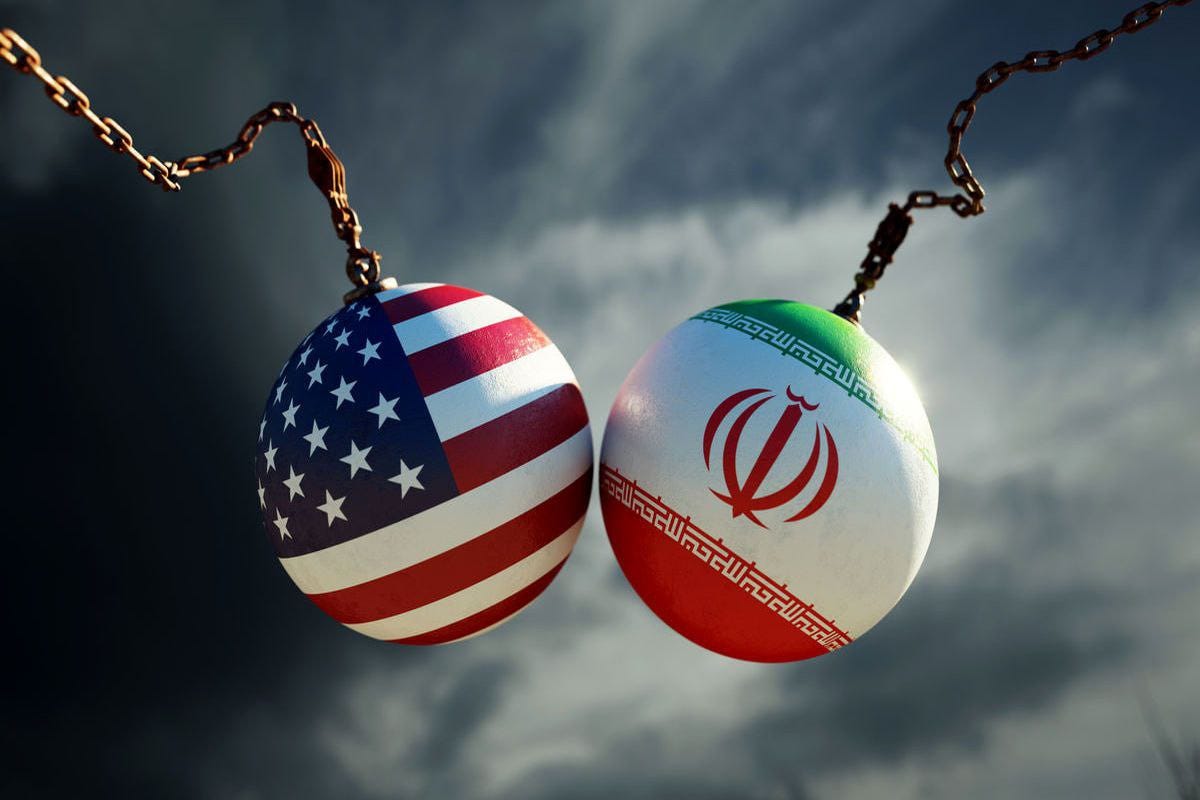
When events accelerate, much more than the protagonists would like, it is a sign that the situation is out of their control. And this is precisely what is happening, right now, to the United States of America. The signs are all there.
Trump's rush to bring home results, which however are not arriving.
The opening of a tariff war, which had as its objective the decoupling from China, which is crashing against the firmness of Beijing.
The emergence of divisions within Trump's inner circle, just three months after taking office.
The inability to emerge (well) from the defeat in Ukraine.
The rush to cut spending, which in a very short time has already produced hundreds of thousands of unemployed.
The progressive bogging down of the Middle East.
The insistence on a conflictual and divisive internal narrative, at the moment of maximum crisis of the empire.
And we could continue, obviously, for a long time. What increasingly emerges, therefore, is the difficulty of the United States in managing its own imperial crisis, and the chaotic international situation that its crisis fuels and exacerbates. The attempt to cover it with an arrogant narrative not only complicates things precisely because it is stinging in itself, but it turns out to be too short a blanket to hide the impasse. And the risk of moving from this to getting into a cul-de-sac is becoming more likely day by day.
Marco Rubio, who came to Europe to try to convince European countries to give in on the issue of sanctions against Russia (a fundamental step to unblock negotiations with Moscow), declares that if the negotiations on Ukraine do not produce results "within a few days", the United States will disengage because they have other priorities. The point is that returning to Trump's initial rhetoric ("I'll solve it in 24 hours") is not helpful; and of course Washington can also try to keep the dialogue with Moscow going regardless of the Ukrainian issue, but there are only two ways to try. Either stop mediating, and therefore also stop any help to Kiev, waiting for Russia to resolve the conflict on the battlefield - which means losing a little more credibility (in the East as well as in the West), taking a more stinging defeat, and in any case considerably lengthening the time for a 'smoothing' of Russian-American relations. Or continue to support Ukraine, but withdraw from the negotiations - which means a greater loss of credibility in the eyes of the Kremlin, and an indefinite postponement of any agreement with the Russian Federation. Because the fundamental issue is that for the US Ukraine means nothing, at most it is taken into consideration as a potential debtor to be squeezed, but for Russia it is a knot in the context of its strategic need to secure those security agreements (European and global), which it has been trying to obtain for at least fifteen years. And if that is not there, the rest is not of much interest. The ability - or not - to exercise its hegemonic power, over Europe and Ukraine, is ultimately the yardstick by which Moscow evaluates the seriousness of the United States.
And it is always Rubio who, on the other problematic front, the Middle Eastern one, takes on the role of the greatest hawk within the administration. Although Trump is portrayed as absolutely flattened on Israeli positions, the reality of the facts says something different; not because he is a pacifist, or is not a good enough friend of Israel, but simply because he is clear about the strategic interest of the United States in the region (which goes beyond the Jewish state), just as he is clear about the risks of passively following Netanyahu's adventurism. Trump's gamble is clearly a very difficult to swallow for the Israeli far right, because it is based on the search for an agreement with Iran. An agreement that is not easy to reach, but which is seen as the only viable path, the alternative being a very hard, prolonged, and potentially shocking war for the entire global geopolitical system, in which the United States would almost certainly find itself alone, and almost certainly against not only Iran and its regional allies, but also Russia and China. Probably not deployed on the front lines with its own armed forces, but certainly fully committed to preventing the fall of the Islamic Republic; in short, the entire American strategy (buying time, dividing enemy forces) would go haywire.
Even in the Middle East, however, the absence of a real US strategy, which takes into account the real balance of power and the positions of the various actors involved, is a harbinger of dangerous swerves. Aggravated precisely by the harmful influence that Israel does not cease to exercise on US politics, and which today means conditioning by a government itself grappling with a crisis of historic proportions, to which it responds with a maximalist strategy completely devoid of any sense of reality.
The long-term Middle Eastern strategy, for the United States, remains that of a more or less hegemonic normalization of the region. That is, to bring the Arab countries to establish stable and peaceful relations with Israel. To achieve this goal, they are trying in the meantime (and in various ways) to dismantle the network of Tehran's allies [1]; reducing Iranian influence essentially means reassuring both Israel and the Arab countries. But how feasible this goal is is another matter entirely. And Israel certainly is not helpful, with its continuous expansionist aims - however crazy and senseless [2], however constantly reiterated, and pursued manu militari.
The great American contradiction is that it finds itself in this situation today because the world has changed (the balance of power has changed, and on various levels), but it has difficulty dealing with the change; not only because, obviously, he doesn't want to accept it, but also because he struggles to even acknowledge it. He's like an old lion who no longer has the strength he once had, to keep at bay the young people who aspire to take his place in the pack, but who continues to roar and swing his paws as if he still had it, exposing himself to the risk of an early end.
But if with regard to the conflict in Ukraine there is always, in the worst case scenario, the possibility of opting out (perhaps not very edifying, but still possible), unloading the burdens and blame onto others - Biden, Zelensky, the Europeans... - this possibility does not exist in the Middle Eastern conflict. The deadly bond with Israel does not make it possible.
The game with Iran, therefore, becomes a crucial step, not only for the Middle East, but for the entire Trump administration. The United States must bring home a result of some stability and marketability, and be capable of keeping the unreasonable ally at bay. The first step is far from easy, because Tehran is aware of its own strengths (and weaknesses), but it is also extremely determined, and is demonstrating considerable tactical and strategic ability in managing the crisis. The repeated Iran-Russia-China trilateral meetings, focused on the issue, Araghchi's trip to Moscow (with a letter from Khamanei to Putin), the visit of the Saudi defense minister to Tehran (and the announcement of a trip to Iran by Prince Mohammed Bin Salman), are all signs of the network that Iran is weaving, to strengthen its negotiating position.
The division that is emerging within the US administration - with Trump, the envoy Witkoff, and partly the head of the Pentagon Hegseth, who insist on the negotiation path, and the secretary of state Rubio who leans towards the military option - testifies not only to the difficulty of the US strategy, but also, precisely, how this is critically reflected on the government itself. The impossibility of keeping goats and cabbages together proves once again to be an insurmountable limit. In some ways, we are faced with yet another similarity between Zelensky and Netanyahu (but obviously the issue is not 'personal'). When the tangle of relations between a great power and a small ally (or proxy) becomes too long-lasting and deep, this ends up changing the nature of the relationship, and the balance between the two shifts, putting levers in the hands of the small one that the big one did not think would manifest themselves. And this is what makes the transition extremely complex today - but also crucial. The US cannot 'abandon' Israel, nor can it force it to accept any solution that appears practicable for Washington. At the same time, finding a possible mediation with Iran means making concessions, which will still appear unacceptable to Tel Aviv. Keeping the devil and holy water together is not possible.
If, at least for the moment, it is likely that a major war has been averted in Europe - at the cost of a strategic defeat for the West - the risk increases greatly in the Levant. Because America cannot afford another strategic defeat, but does not seem capable of finding another way out.
Notes
1 - At this stage, Washington is exercising a diversified tactic. As for Yemen, it maintains bloody military pressure, even if it is aware that the results - in terms of reduction of Yemeni operational capacity - are very poor. And in fact they are exerting a certain pressure, in particular on the United Arab Emirates, so that they put together a force capable of acting on the ground (we are talking about 80 thousand men already ready, and there have already been clashes along the contact line). The experience of the long war sponsored by the UAE and Saudi Arabia (with the USA behind them), and which ended with the victory of Ansarullah, does not bode well. In Iraq, pressures are mounting to disband pro-Iran militias made very complicated both by the fact that the Shiite majority in government maintains good relations with Tehran, and by the persistence of the US military presence in the country and, last but not least, by the fact that most of them are part of the Popular Mobilization Forces (in turn part of the army). Likewise, in Lebanon there is very strong pressure on the government to disarm Hezbollah. But here too, what makes the issue very complex is on the one hand the Israeli occupation (in violation of the agreements) and the continuous attacks on Lebanese territory, and on the other the risk of triggering a new civil war, with the Resistance (and its allies) enjoying broad consensus in the country, certainly the strongest, most experienced and best organized military force, and which could at least arrive at a Yemeni-type situation, with a secession of part of the country.
2 - For Israel it is already a problem to maintain a predominance of the Jewish population within the small state (the genocidal delirium and, more simply, that of expelling the Palestinian populations from their own land, also arise from this), let alone in a hypothetical Greater Israel, extending from Sinai to Syria, from Jordan to the Mediterranean Sea, passing through Lebanon, Iraq and parts of Saudi Arabia...